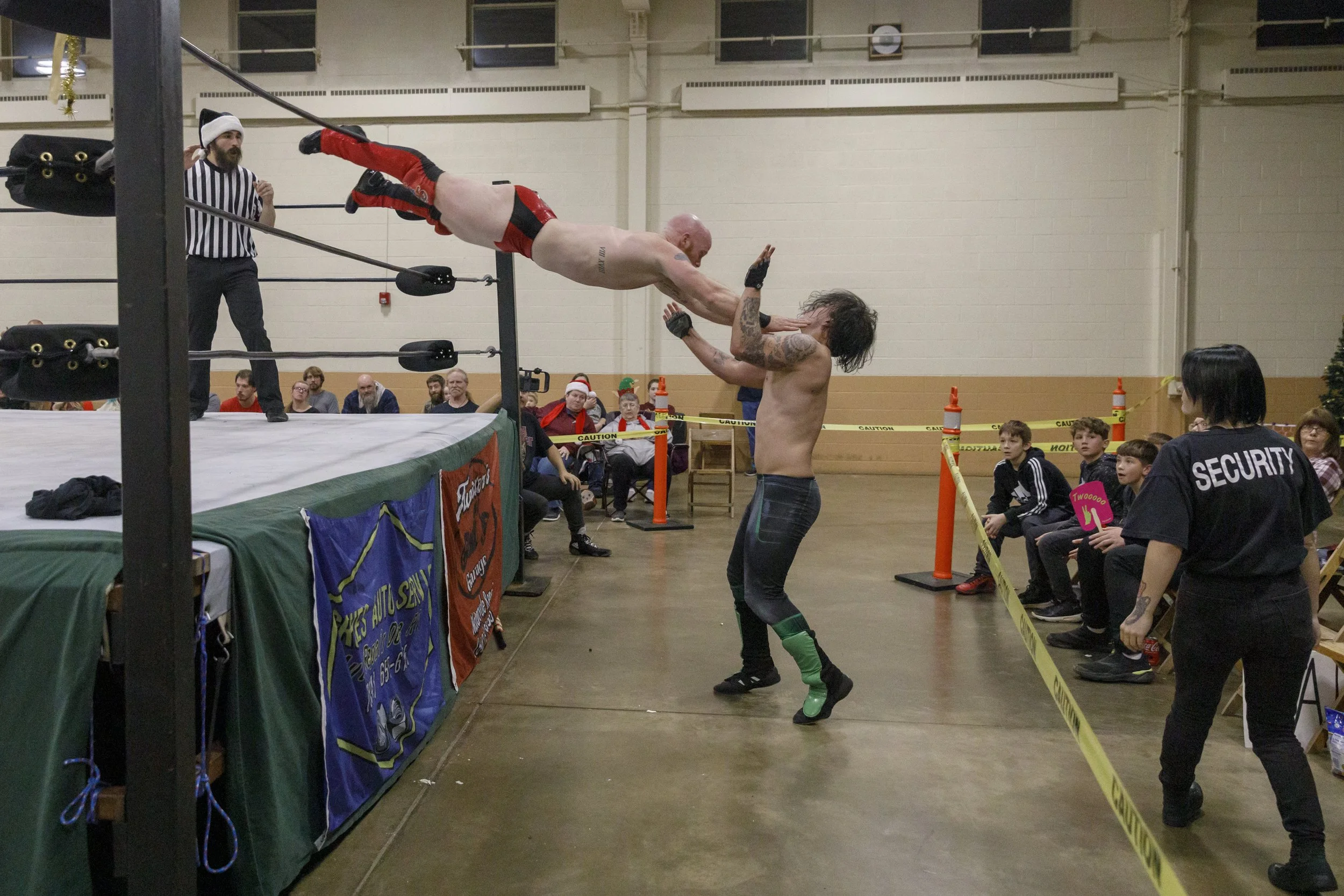







Riley Rose lunges out of the ring during a show in Spencer, W. Va. Professional wrestlers often perform stunts and stay in character even outside the ring, a practice known as ‘kayfabe’—the concept that everything beyond the curtain is real. Rose incorporates his Irish heritage into his wrestling persona, a character he developed and refined on the fly when he first started wrestling. “When I first started, I was excited to get in the ring but didn’t know what to do. I had to make a character on the fly and adapt as I went,” he recalls.
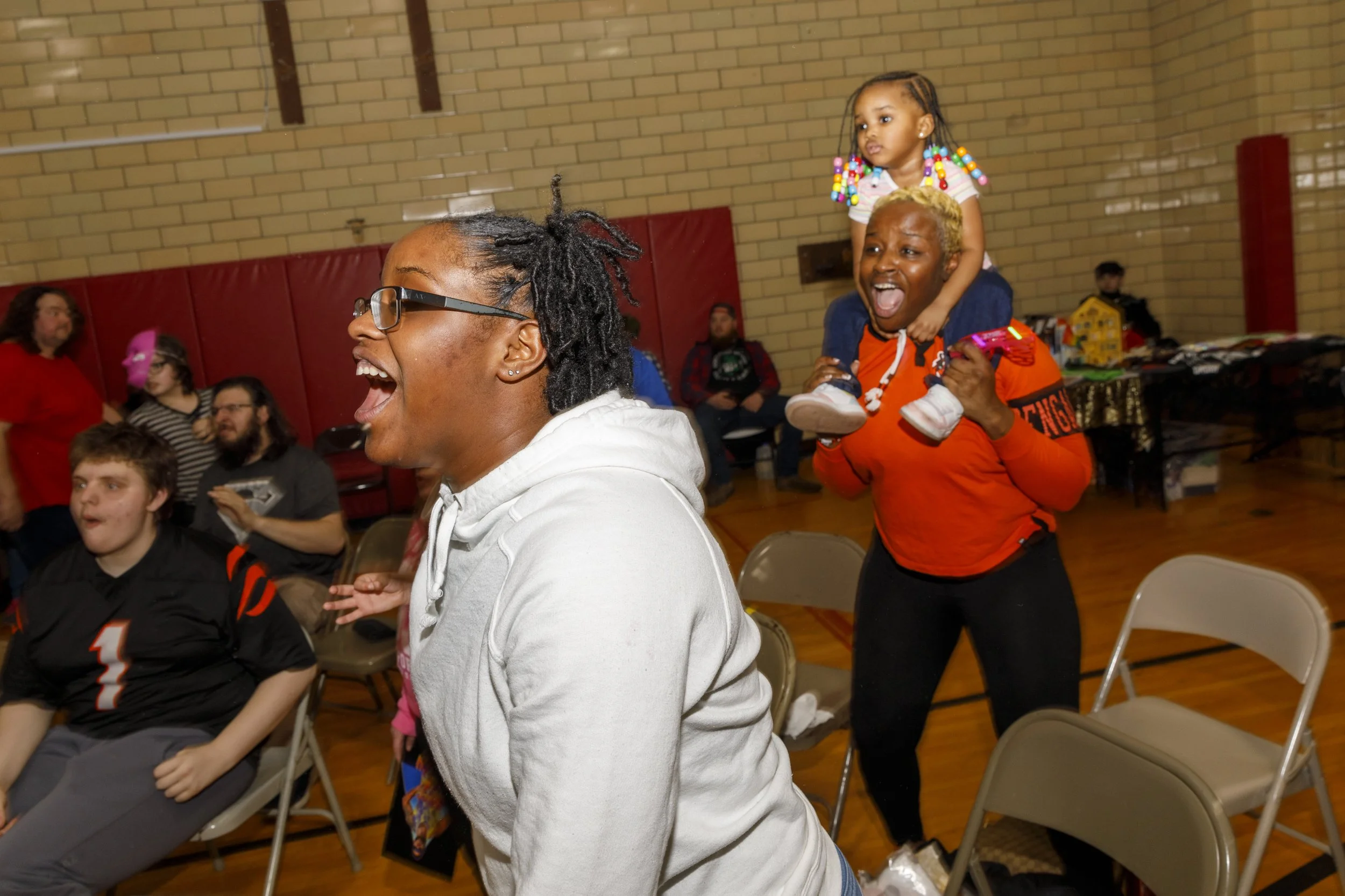
Young fans cheer for pro wrestling legend Rhino at a gymnasium in Oak Hill, W. Va. This show was hosted by Appalachian Championship Wrestling (ACW) and promoted by the Oak Hill Middle School principal, a longtime pro wrestling fan. Promoters often bring in veteran wrestlers who have built careers in professional wrestling to draw larger crowds. During his career, Rhino worked for several national promotions, most notably Extreme Championship Wrestling (ECW) and WWE.
Mikey Montgomery prepares for his match by putting on his wrestling gear backstage at a show in Akron, Ohio, hosted by Absolute Intense Wrestling (AIW). Montgomery, a rising star in the independent wrestling scene, blends high-energy athleticism with charismatic storytelling, drawing fans from across the region. Known for his innovative moves, Montgomery represents the new wave of wrestlers redefining the sport through AIW’s platform, which has been a cornerstone for showcasing top-tier indy talent.
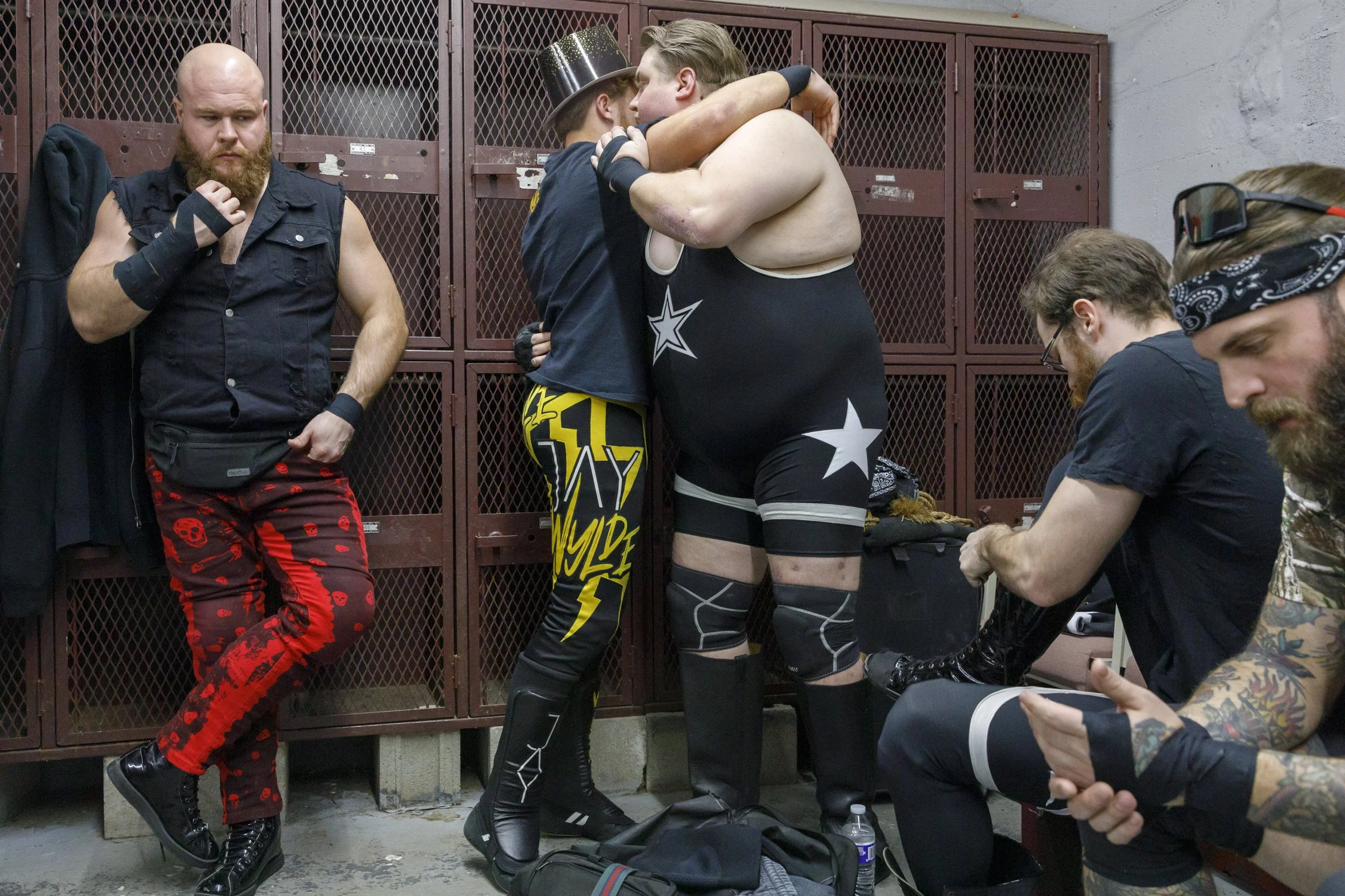
Jay Wilde and Noah Ray rehearse moves in the locker room before a New Year’s Eve show in Williamson, W. Va. Independent wrestling, often rooted in a do-it-yourself (DIY) ethos, thrives on the collaboration of its tight-knit community. Wrestlers frequently support one another, sharing advice, techniques, and encouragement both in and out of the ring. Events like this showcase not only their athleticism but also their shared passion for the craft, highlighting the camaraderie that defines the world of independent pro wrestling.
Trainees Nathan Bates, Zachary Don, and Jesse Sinclair load a wrestling ring into the back of a U-Haul truck before a show in Cincinnati. Professional wrestling promotions typically set up and tear down the ring after each show. One of the ways aspiring wrestlers pay their dues is by helping with this process. Trainees like Dontae Casson (above) show their dedication by arriving early, working security, and staying late to help tear down the ring. During a match in Cincinnati, Ohio, Casson swept up Skittles that had been thrown around the ring.
Bruce Grey performs in a gymnasium in Cincinnati, Ohio. Grey has been injured countless times and even ended up in the hospital. “I had a reaction to the stuff they gave me and I stopped breathing in the ER on anesthesia. My lungs stopped working,” said Grey. Despite several surgeries and ongoing physical complications, Grey continues to perform with his partner Ronnie. “Wresting is a drug, it’s an addiction.” The duo has been through many iterations of stage names including ‘Mobile Homewrecker,’ displayed on his shirt.
Wrestler Nick Hamrick trains in his uncle’s basement near Teays Valley, W. Va. Hamrick grew up practicing wrestling moves on a trampoline beside his uncle’s home and says that coming back to this location is a reminder of his roots. “When I was coming up there was nothing. The opportunities just weren’t around. You’d get a trampoline, maybe a guy with a mattress in the backyard and re-create your own backyard promotion. For guys like me, it’s even more surreal inside the ring. A lot of people have a dream, and they can go join a team. It wasn’t like that for me coming up,” says Hamrick.